
Seed Starting Trays for Hot Pepper Seeds
updated 12/3/24
A popular alternative to the Double Cup Method especially for larger gardens, is using seed starting trays and pots. Although they are more expensive (and much more work), you can fit more seeds per sq. ft. which allows you to control the environment much more easily. For example, when utilizing a 200-cell seed starting tray you can control the humidity for all 200 seedlings and you will only need one heat mat.
You will first need to start your seeds in small cell trays and then transplant them into larger starter pots shortly after they germinate.
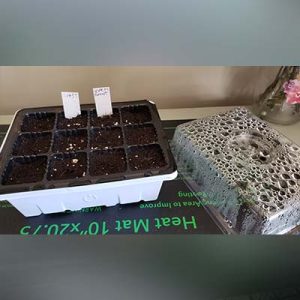
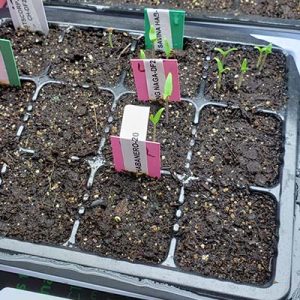
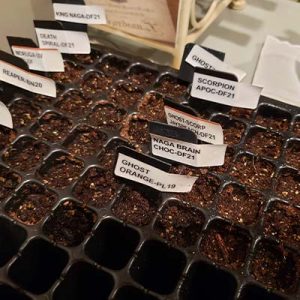
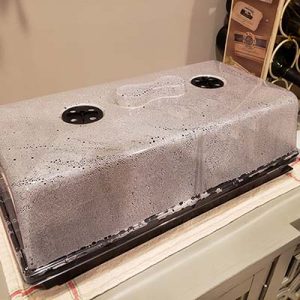
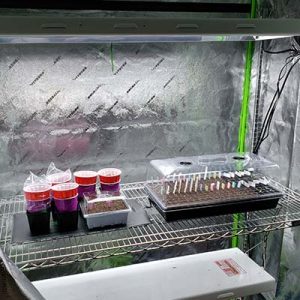
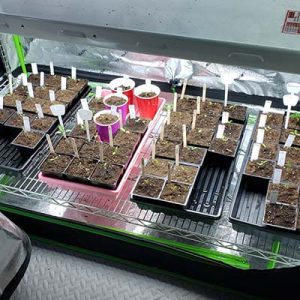
Materials For Growing Pepper Plants in Trays
- You will need a seed starting tray, the bottom tray, and a humidity dome. You can buy them separately, or in kits. These 12-cell tray kits are pretty popular. I’m currently using this Bootstrap Farmer kit which features a 200-cell tray, 1020 tray, and dome. Bootstrap Farmer makes incredible products that will last a lifetime! If you decide to purchase your trays separately, make sure the seed starting trays are designed to fit inside a 1020 tray.
- Soil. Suggestions below.
- Small plant labels. Or use plastic spoons (write the type of seed on the back of the spoon! Wooden popsicle sticks tend to absorb water and get moldy.
- Seeds. You do have seeds right?
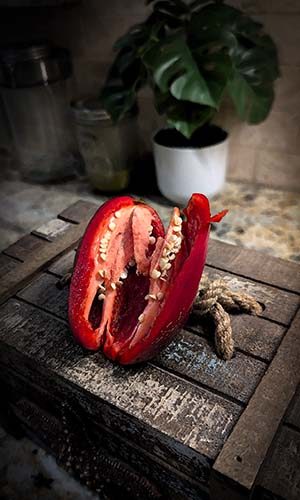
Pepper Seeds
Orders over $25 ship FREE!
The Best Soil For Hot Pepper Seeds
They sell soil specifically for starting seeds, but I found that it’s really not necessary. Since I typically use Fox Farm’s Ocean Forest and Happy Frog soils when I up pot, I also use it in my seed starting trays. Some people claim that it’s “too hot” for germinating seeds. If this is a concern, try Happy Frog since it’s not as heavily amended as Ocean Forest.
Happy Frog is a little cheaper than Ocean Forest but either will do. Or you can do a mix of both! For Long Islanders, check out Agway in Mt. Sinai, NY.
Other Soil Options
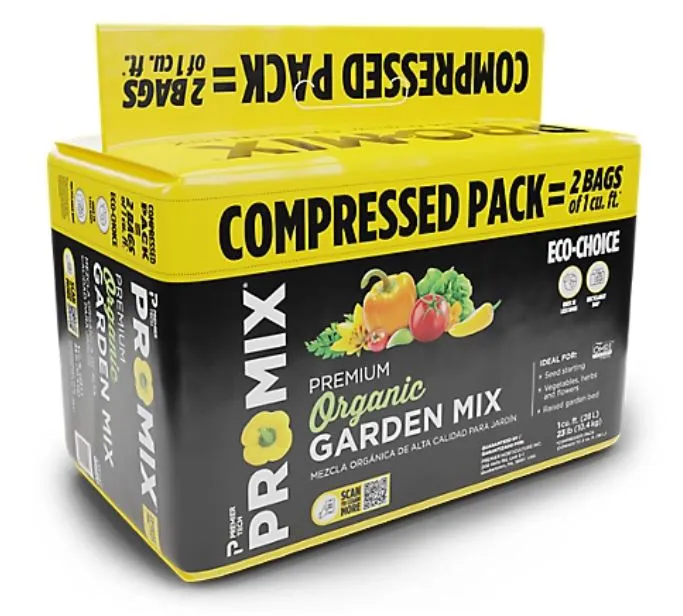
This PRO-MIX Premium Organic Garden Soil (yellow bag) can be used to germinate seeds in and can also be used to up pot your seedlings. This is just a basic blend of peat, perlite, and mycorrhizae. They also sell a red “moisture” garden mix but I’ve heard of people having drainage issues with that one.
You can also use straight peat moss too. Sometimes if it’s too dried out it will not absorb water. In this case, put some peat inside a gallon zip lock bag, add water and beat the hell out of it. It will eventually start absorbing water.
How to Start Pepper Seeds in Trays
The size of your seed starting tray depends on how many plants you intend to grow. As you probably already know, hot pepper seeds can be somewhat unpredictable when it comes to germinating. I recommend planting 3 or more seeds (minimum) in each cell to ensure germination, since waiting around will cut into your season if nothing grows and you need to start over.
Timing is a bit critical here. Making mistakes at this point is going to take away from your growing season. I like to sow my superhots (reaper, ghost, scorpion, etc) one week before I sow my regular peppers (cayenne, bell, poblano) this way I can expect them all to germinate around the same time (ish). If I do not see sprouts in 10 days I will start another tray as a backup.

I use a 200-cell seed starting tray and plant 3 seeds per cell. For example, if I want to guarantee that I will have 10 habanero plants, I will plant 10 cells with 3 seeds each.
For smaller seed starting trays where the cells are larger, like the 12-cell tray mentioned above, you could plant 6-10 seeds of the same type in each cell. After they germinate you could then gently separate the seedlings and plant each one into their own pot.
Be sure to label your seeds (and take pictures in case the labels fall out!)
How Long Do Hot Pepper Seeds Take To Germinate?
In optimal conditions you can expect germination in about a week or so. Superhots like the Carolina Reaper can take around 2 weeks (and some up to 4 weeks!) to germinate so be patient. It’s very exciting to see the little sprouts emerge from the soil.
When your seeds have sprouted you can turn off the heat mat if you’re using one. They also need light asap so be sure to read the section on lighting.
Watch the Video – How To Sow Your Seeds
Video Updates
In my experience, the Jiffy Seed Starting mixture is unnecessary. I was able to germinate directly in Ocean Forest and Happy Frog with very good results!
-updated 3/28/22
Best Temperature For Germinating Hot Pepper Seeds
Put them in the warmest room of your house. Hot pepper seeds germinate best when the soil temp is between 65-95 degrees, 80 being the optimal soil temperature. You can use a meat thermometer to check the temp (remember to wash it afterwards :). You can also use heat mats to raise temps by 10-15 degrees if you need the extra warmth. Some heat mats even have a thermostat built in so you can dial them in precisely! When the seeds have sprouted you no longer need the heat mat. Continuing to use it will sometimes encourage the seedlings to get tall and leggy.
Watering Hot Pepper Seeds
Check on the seedlings once a day. Make sure the soil has not dried out. Make sure it is moist, not wet. Moist! I use a spray bottle (or even a turkey baster). I use an empty milk jug, fill it with tap water, and let it sit for 24 hours uncovered to allow the chlorine to evaporate and the water to come to room temperature.
Make sure the soil is not saturated and the tray below is not full with water. Moist is the key here.
Do Hot Pepper Seeds Need Light?
They don’t need light until they start to sprout. When they do sprout you will need to start giving them light asap or else they will get tall and “leggy”. Make sure to read the section on lighting.
When the seeds germinate and get to about 1-2″ tall it’s time to “Pot them up” or transplant them into a larger container…